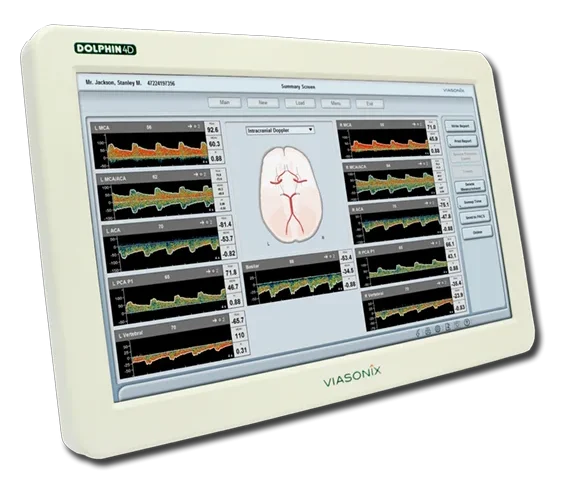
Book a Dolphin TCD emboli detection demo to assess HITS workflow, bilateral monitoring, reporting, connectivity and clinical fit.
Dolphin transcranial Doppler systems include tools for identifying and reviewing suspected high-intensity transient signals during cerebral blood-flow monitoring. A product demonstration lets clinical and technical stakeholders assess the workflow without treating device output as a diagnosis or guaranteed patient outcome.
What Can A Dolphin TCD Emboli Detection Demo Show?
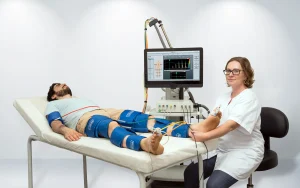
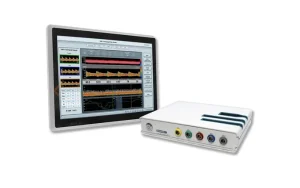
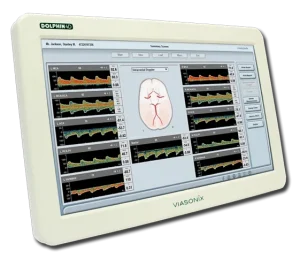
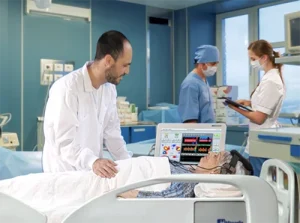
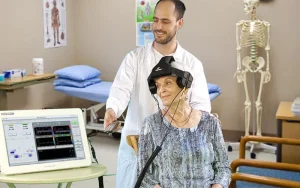
The demonstration can cover bilateral monitoring, depth gates, HITS event lists, waveform and audio review, power M-mode displays and the steps used to confirm suspected events. The exact workflow depends on the Dolphin configuration and accessories being considered.
Review our Dolphin transcranial Doppler range before the session so your team can identify the relevant platform.
- Clinical objective: Define whether the intended use involves intraoperative monitoring, ICU observation, stroke services, PFO assessment or research.
- Monitoring workflow: Confirm unilateral or bilateral requirements, expected duration and who will operate and interpret the system.
- Data environment: Document PACS, DICOM, HL7, reporting, export and cybersecurity requirements for technical review.
How Should Clinical Teams Evaluate HITS Information?
TCD can provide physiological information about blood-flow velocities and suspected embolic signals. Interpretation belongs within an approved clinical protocol and should consider artefact, patient factors, acoustic windows and other clinical findings. No equipment supplier should claim that one system alone prevents neurological complications.
Our earlier overview of Dolphin IQ and 4D technical features explains emboli detection, continuous recording and hospital-system integration.
International consensus literature describes recommended terminology and identification methods for microembolic signals. Your clinical governance, biomedical engineering and procurement teams should determine how that evidence applies to local protocols and intended use.
For independent context, consult international consensus criteria for microembolic signal detection. We apply that reference only within the limits of our product or service role.
Which Product And Implementation Questions Matter?
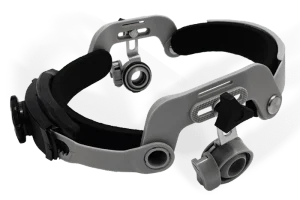
Ask which probes, fixation options and software modules are included; how studies are stored and reviewed; what training is available; and how the system connects with hospital infrastructure. Confirm the applicable regulatory status and manufacturer documentation for the proposed configuration.
Evaluation criteria should be agreed before the demonstration. Examples include the time required to establish and maintain a signal, how suspected events are displayed for clinician review, whether bilateral monitoring supports the intended protocol, and how authorised users retrieve a study. Any test scenario must remain appropriate for the facility’s governance and the manufacturer’s instructions during a formal evaluation session.
For monitoring-specific context, read our continuous TCD monitoring information covering bilateral measurement and embolic-event observation.
A demo should involve the people who will use, support and approve the technology. Their questions are more valuable than a feature list because they expose workflow, integration and governance gaps before procurement.
Arrange A Clinically Focused Dolphin Demonstration
A vague product presentation wastes clinical time. Define the intended application and evaluation criteria first.
Use our demonstration request form to provide the care setting, current equipment, monitoring objective, connectivity requirements and stakeholders attending. Our team can then prepare a focused discussion around the relevant Dolphin configuration.